
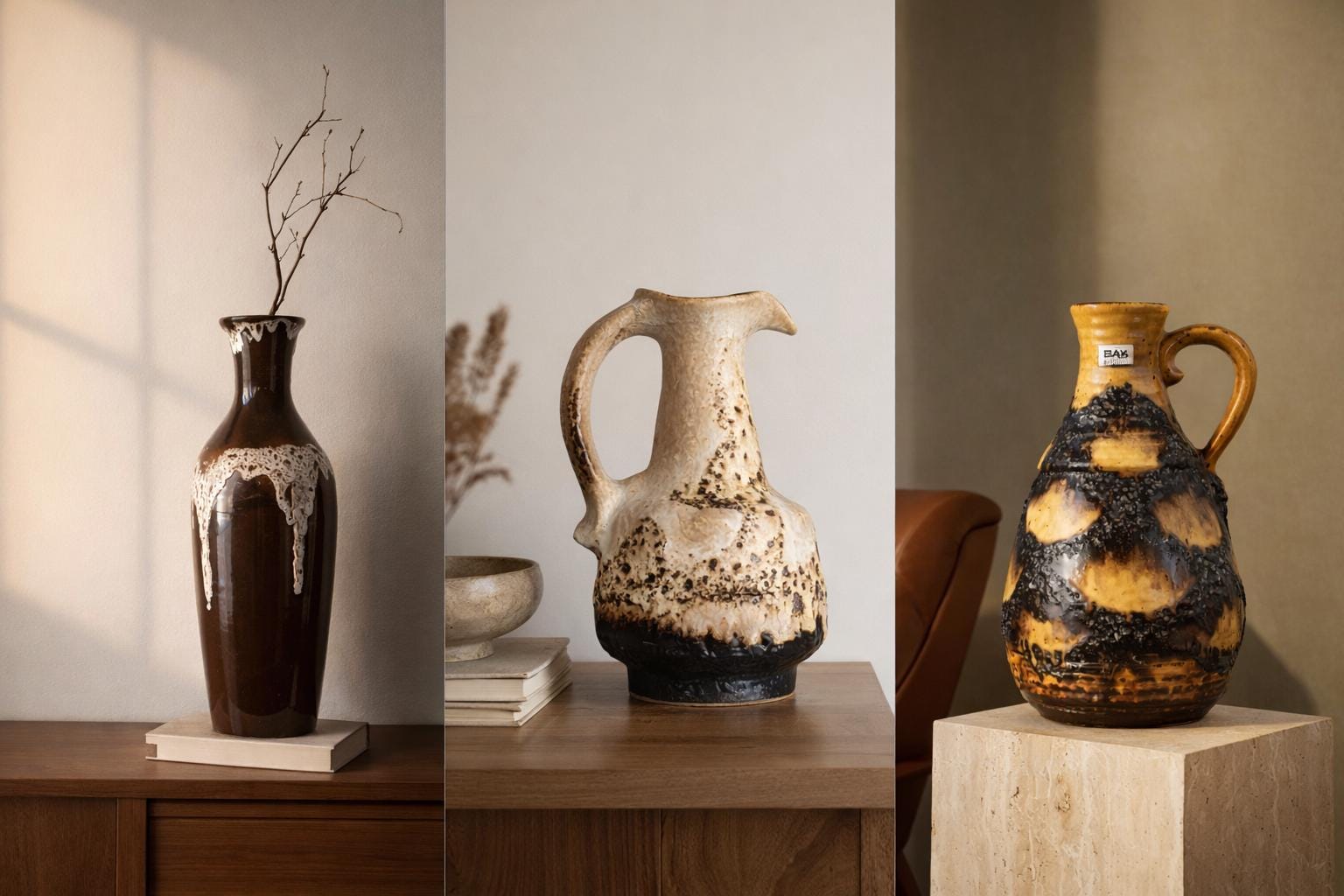
If you’ve ever held a heavy West German vase with thick volcanic glaze dripping down its surface, you already understand the appeal of Fat Lava. It’s not delicate. It’s not subtle, and that’s exactly the point. The Fat Lava movement remains one of the most distinctive ceramic trends of the 20th century — and today it’s experiencing a strong resurgence among collectors, interior designers, and serious vintage lovers. Let’s look at where it came from — and why it still matters.
What Is “Fat Lava”?
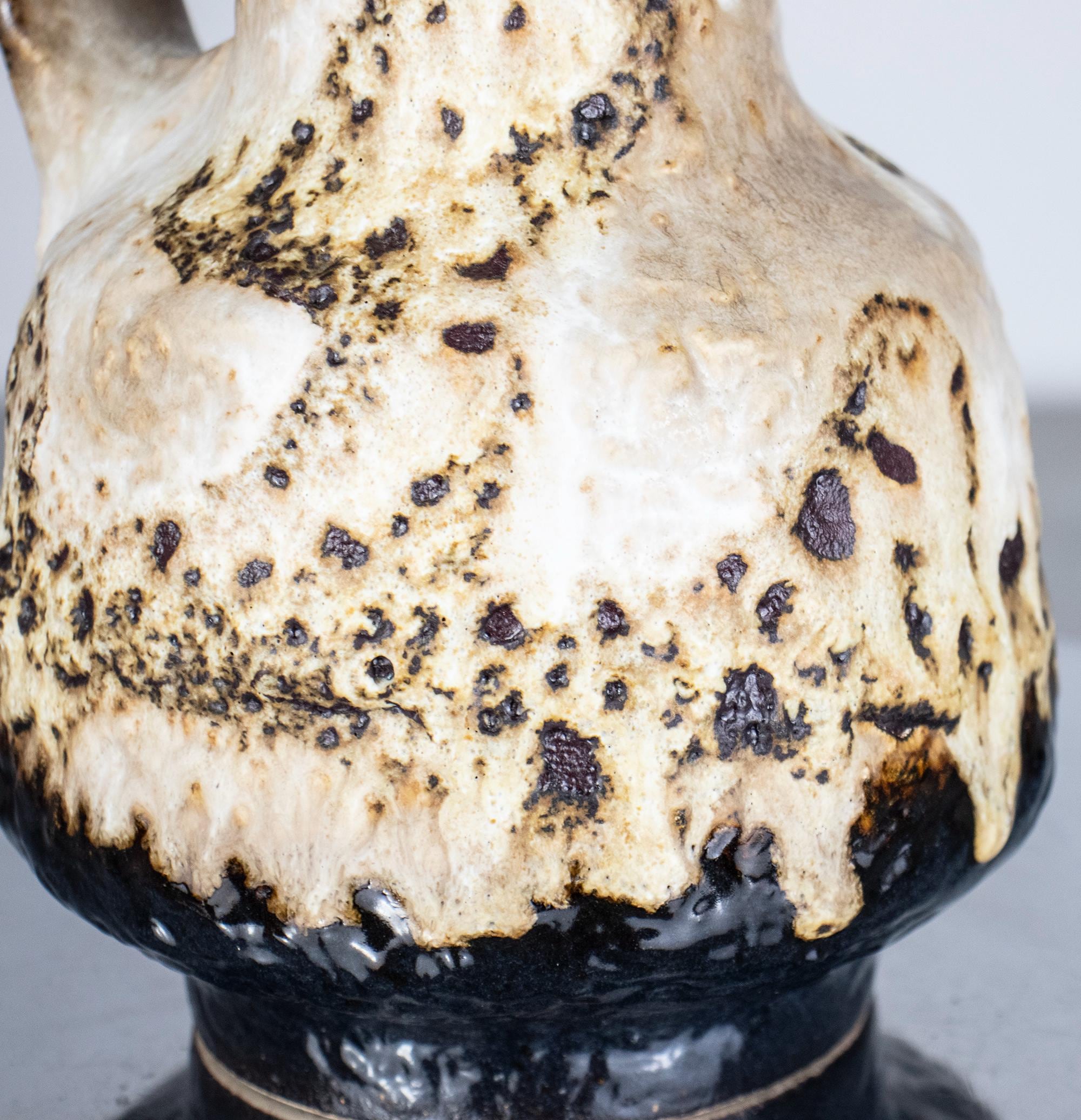
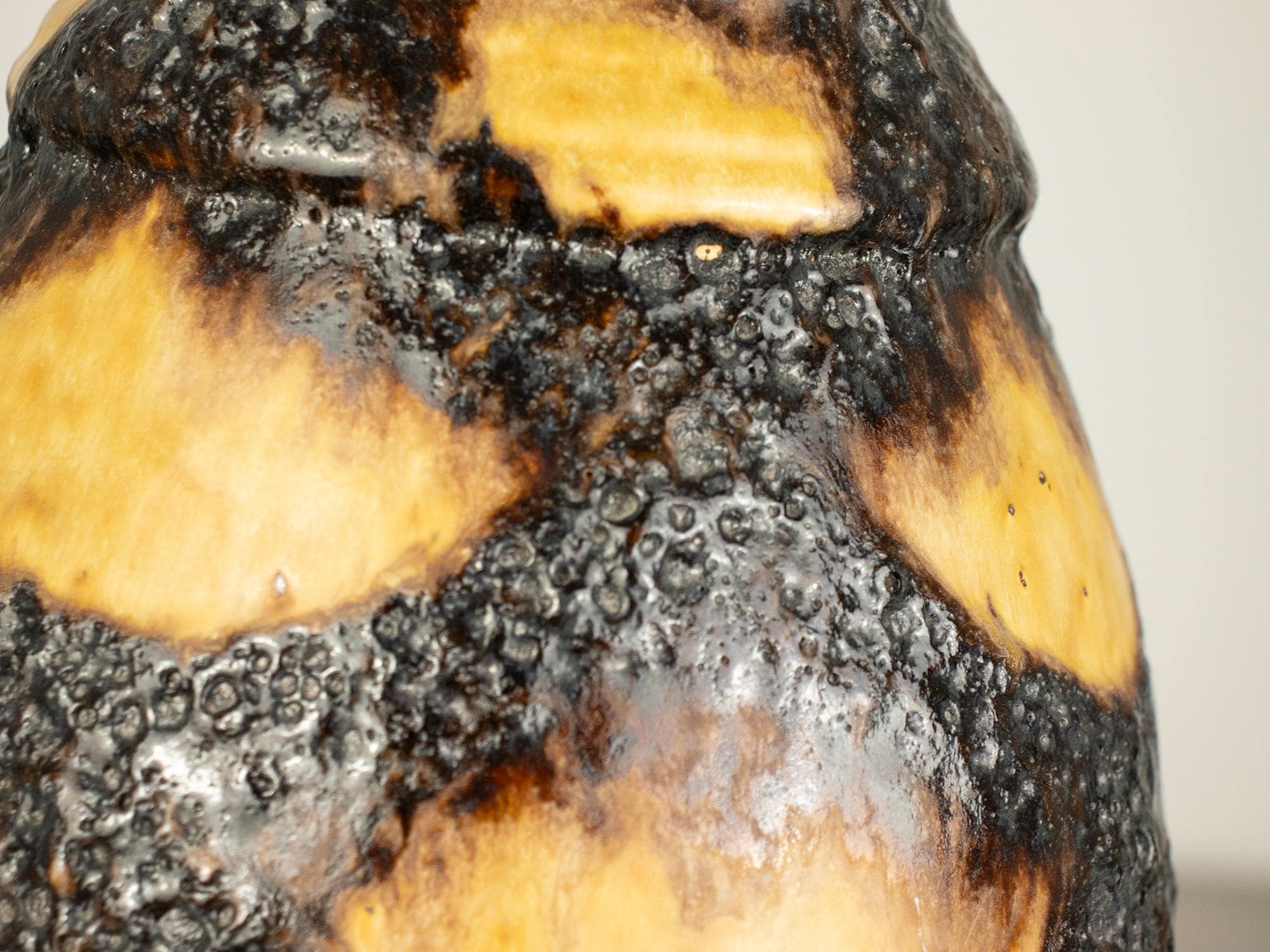
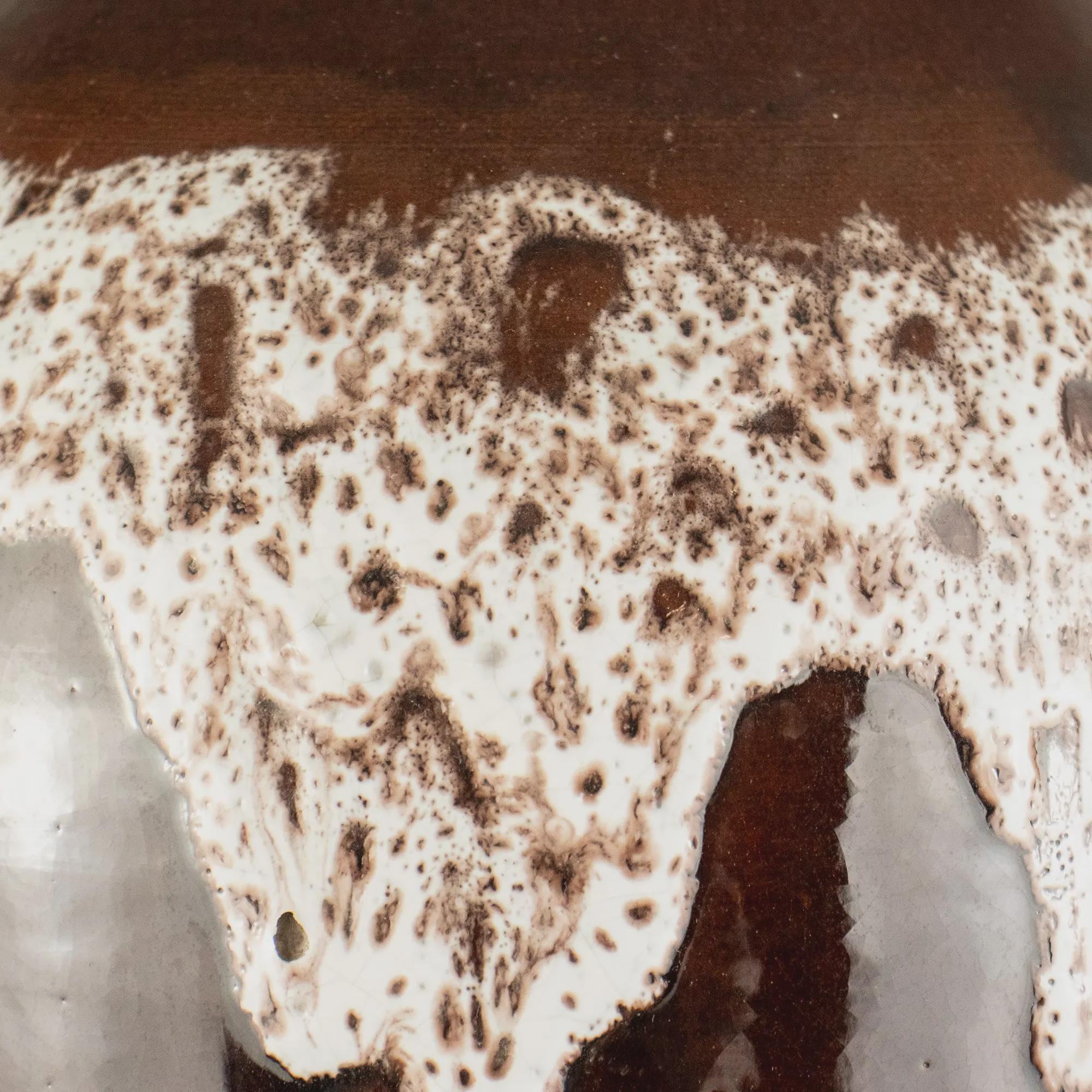
“Fat Lava” is a collector’s term for a style of West German pottery produced mainly in the 1960s and 1970s. The name comes from the thick, textured, often volcanic glaze that looks like molten lava flowing over the ceramic surface. These glazes were often:
- Highly textured
- Layered and reactive
- Contrasting in color
- Dramatic and expressive
Creamy ivory dripping over black. Fiery orange bursting through brown. Deep reds against charcoal bases. It was pottery that demanded attention.
Post-War Germany and the Rise of Bold Design
After World War II, West Germany experienced rapid industrial rebuilding. Ceramics manufacturers embraced experimentation. They weren’t trying to recreate traditional porcelain refinement — they were pushing forward. Factories like:
- Carstens Tönnieshof
- Dümler & Breiden
- Bay Keramik
- Scheurich
- Jasba
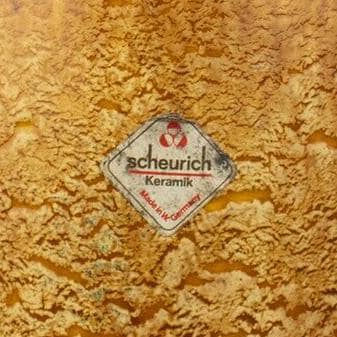
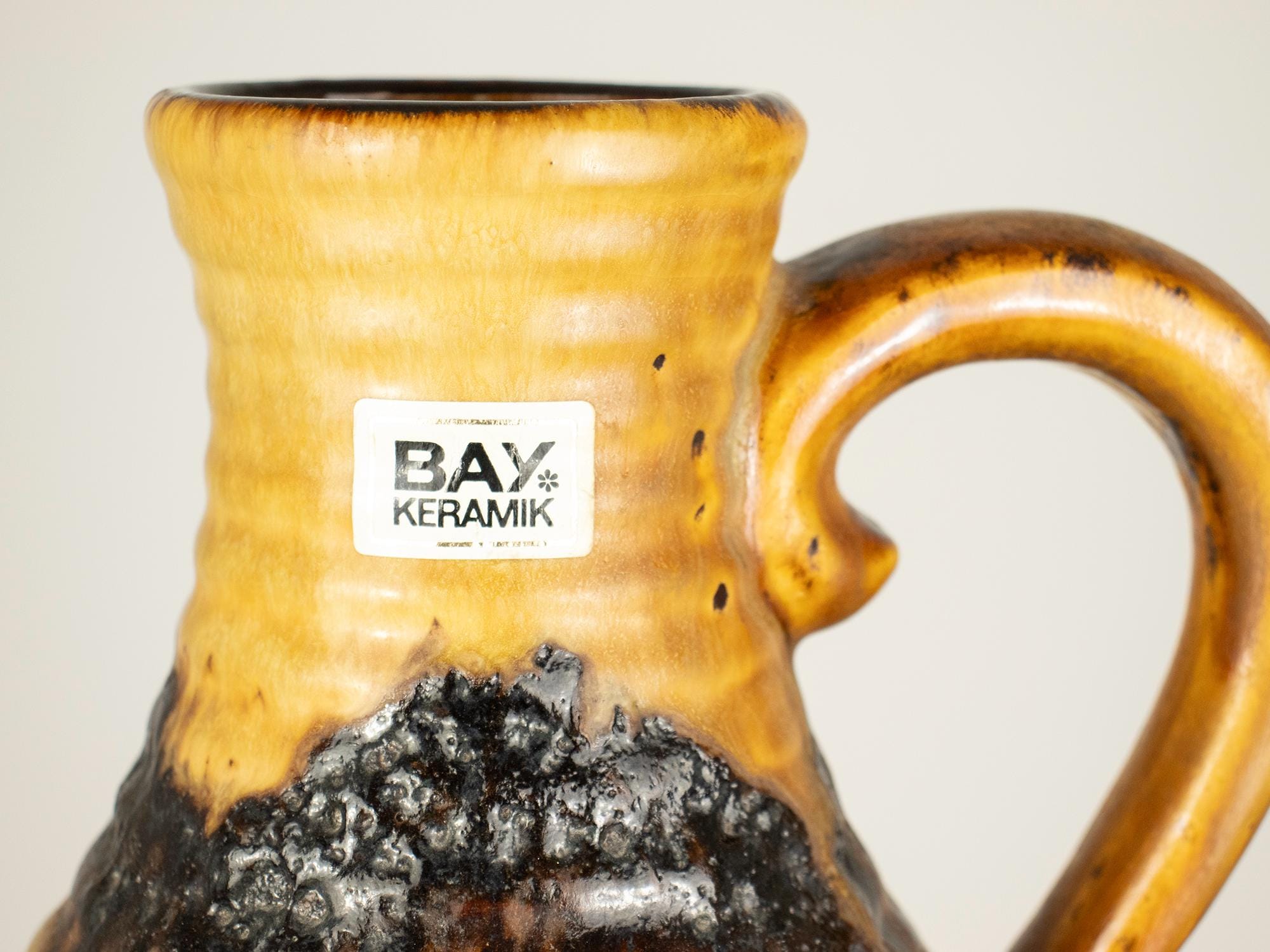
began producing affordable art pottery in bold shapes and daring glazes. These were not studio one-offs. They were industrial art pieces — accessible, modern, and expressive. And that was revolutionary.
Why Fat Lava Was Different
Mid-century Scandinavian design favoured recognisingcentimetres minimalism, smooth surfaces, and restraint. Fat Lava went in the opposite direction. It embraced:
- Texture over smoothness
- Drama over restraint
- Earth tones over pastels
- Sculptural presence over fragility
The pieces often feel almost brutalist — heavy bases, strong handles, exaggerated necks. They weren’t made to disappear into a room. They were made to anchor it.
The Numbers Tell a Story
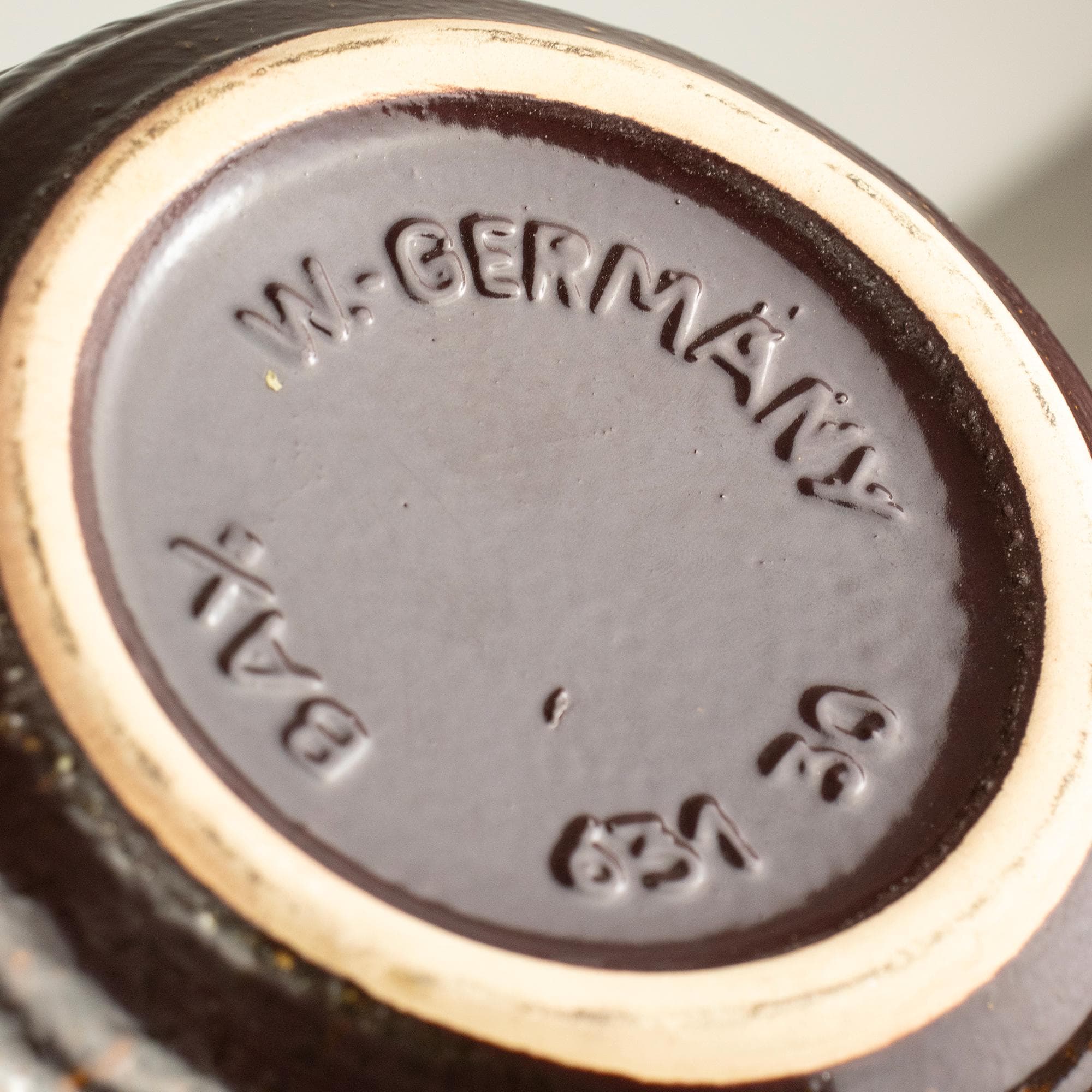
Most West German vases are marked with a model number like: 7907-25 113/23 631-30 The second number usually indicates height in centimeters. This system allowed collectors today to identify and track specific models. Larger versions (25 cm, 30 cm and above) are typically more sought after, especially in strong glaze combinations.
Why It’s Collectable Today
For years, West German pottery was undervalued. It was seen as “retro” or even dated. That changed. Collectors began recognizing:
- The sculptural forms
- The experimental glaze chemistry
- The design bravery
- The historical context
Today, high-quality Fat Lava pieces — especially from Carstens, Dümler & Breiden, and Bay — are actively collected worldwide. Interior designers love them because they work beautifully in:
- Minimal modern spaces
- Brutalist interiors
- Mid-century rooms
- Industrial lofts
One strong piece can transform a shelf or console instantly.
What to Look For as a Collector
If you’re buying Fat Lava pottery, pay attention to:
colour✔ Clear base marks (W-Germany, model numbers) ✔ Strong glaze contrast ✔ Good condition (no cracks or repairs) ✔ Larger sizes (25 cm+ often perform better) ✔ Interesting forms (handled shapes, sculptural silhouettes). Not all pieces are equal. Glaze quality matters more than brand alone.
Why We Love It at Balkan Hangar
At Balkan Hangar, we look for pieces that feel powerful. Fat Lava ceramics are honest. They show the kiln’s fire. They celebrate imperfection. They don’t apologise for being bold. In a world full of safe, minimal design, Fat Lava still has attitude, and that’s why it endures.
Explore our curated West Germany pottery at Balkan Hangar → https://www.balkanhangar.com/shop/48270838/glass-ceramics